

Search is changing. Instead of always typing a query into a search engine like Google and browsing through a list of websites, people can increasingly use AI-powered platforms to find direct answers, recommendations, and comparisons.
Tools such as ChatGPT, Google AI Overviews, Google AI Mode and Perplexity can summarise information from multiple sources and provide users with a conversational response. For businesses, this creates another potential visibility opportunity: being mentioned, recommended, or cited within AI-generated answers.
This is where Generative Engine Optimisation (GEO) comes in.
GEO focuses on making a brand’s online presence easier for generative AI systems to discover, understand, and potentially reference when generating answers. It does not replace traditional SEO. Instead, it builds on strong SEO foundations to prepare businesses for a changing search environment.
What Is Generative Engine Optimisation?
Generative Engine Optimisation is the practice of improving a website’s content, authority, and digital presence so it has a better opportunity of being surfaced or cited in AI-generated search experiences.
Traditional SEO primarily focuses on improving a website’s visibility in search engine results pages. GEO considers another potential outcome: whether your business or content becomes part of the answer generated by an AI search system.
For example, a user might ask:
“What are the best digital marketing agencies in Sydney for small businesses?”
Instead of receiving a conventional list of links, an AI platform may generate a summary of several agencies and explain why each one could be suitable.
The goal of GEO is to make your business a credible source that AI systems can understand and reference when responding to relevant questions.
Why Does GEO Matter for Australian Businesses?
Australian consumers are becoming more comfortable using AI tools for research, product discovery and decision-making. This means businesses need to consider where their customers are searching, not just how they rank for traditional keywords.
Google states that its existing SEO best practices remain relevant to generative AI search. Its AI Overviews and AI Mode use core Search systems to retrieve relevant information, so established SEO fundamentals continue to play an important role.
For Australian businesses, GEO can be particularly important in competitive markets such as:
- Sydney
- Melbourne
- Brisbane
- Perth
- Adelaide
- Canberra
- Gold Coast
Whether you operate an e-commerce business, professional service, finance company, trades business or digital agency, customers may increasingly ask AI systems to compare providers and recommend businesses.
If your brand is absent from those conversations, you could miss an important part of the customer journey.
GEO vs Traditional SEO: What’s the Difference?
SEO and GEO have different immediate objectives, but they overlap significantly.
Traditional SEO focuses on:
- Search rankings
- Organic traffic
- Keywords
- Backlinks
- Technical optimisation
- Search intent
- Website authority
Generative Engine Optimisation focuses on:
- AI visibility
- Brand and content mentions
- Potential citations
- Factual accuracy
- Entity recognition
- Topical authority
- Content that can be retrieved and understood
- Presence across trusted third-party sources
However, this does not mean businesses should abandon SEO.
In fact, Google specifically states that its generative AI search experiences are built on existing Search systems and that foundational SEO practices remain important.
The most effective strategy is therefore to combine SEO and GEO rather than treating them as competing disciplines.
How Does Generative Engine Optimisation Work?
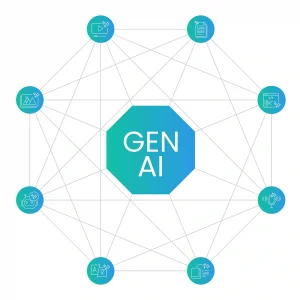
AI search systems need reliable information to produce useful answers. They may retrieve information from websites and other sources, assess its relevance and incorporate information into a generated response.
This makes several factors important for GEO.
1. Create Clear, Factual Content
AI systems need to understand what your business does and what information your page provides.
Avoid vague statements and excessive marketing language. Instead, clearly explain:
- Who you are
- What you offer
- Who your services are for
- Where you operate
- What makes your business different
- How your products or services work
Clear information is easier for both users and search systems to interpret.
2. Answer Specific Questions
People often interact with AI search using conversational questions rather than short keywords.
For example, instead of searching:
“SEO agency Sydney”
a user might ask:
“What should I look for when choosing an SEO agency in Sydney?”
Your content should address the broader questions surrounding your products and services.
Create useful resources that answer customer questions, explain complex subjects and address common objections.
3. Demonstrate Expertise and Experience
GEO is not simply about producing more content or publishing more pages.
AI systems need reliable information, and businesses should demonstrate genuine expertise through useful, accurate and original material.
Include:
- First-hand experience
- Original insights
- Data and statistics
- Case studies
- Examples
- Expert commentary
- Author information
- Updated information
This can strengthen your overall content quality and authority while creating useful information that AI systems can potentially reference.
Build Strong Topical Authority
One of the most effective approaches to GEO is developing comprehensive coverage around important topics.
Suppose an Australian finance broker wants to become known for home loans.
Rather than creating one page targeting “home loans Australia”, the business could develop useful content covering:
- First home buyer loans
- Home loan refinancing
- Fixed vs variable home loans
- Offset accounts
- Redraw facilities
- Self-employed home loans
- Investment loans
- Home loan eligibility
- Home loan deposits
- Borrowing capacity
This creates a stronger topical ecosystem and gives search engines and AI systems more context about the business’s expertise.
Optimise Your Business Entity
An important consideration for GEO is making your business information clear and consistent across your website and other reputable sources.
Your website should clearly communicate your:
- Business name
- Services
- Location
- Industry
- Areas served
- Team members
- Expertise
- Contact information
Keep these details consistent across your website and other reputable online platforms.
Structured data can also help search engines understand entities and relationships on your website, although businesses should not treat schema markup as a shortcut to AI visibility.
Build Your Presence Beyond Your Website

GEO extends beyond your own website.
Information about your business can appear across multiple online sources, giving search and AI systems additional context about your brand.This means your broader digital footprint matters.
Consider building credible mentions through:
- Industry publications
- Australian business directories
- Relevant news websites
- Professional organisations
- Reviews
- Case studies
- Partnerships
- Industry associations
- Social platforms
- Authoritative third-party websites
The objective should not be to create artificial mentions. Instead, build genuine authority across the web.
This matters because AI-generated answers can draw on information from multiple sources.
Make Content Easy to Understand
Content structure matters.
Use descriptive headings, short paragraphs, lists, tables where appropriate and direct answers to questions.
For example, instead of writing several paragraphs before explaining a concept, start with a concise definition and then expand on it.
A strong GEO-friendly structure might include:
What is X?
A direct definition.
How does X work?
A simple explanation.
What are the benefits?
Key benefits in a list.
How much does X cost?
Relevant pricing information where appropriate.
What should businesses consider?
Practical advice.
This structure improves usability for people while making important information easier to identify.
How to Measure GEO Performance
Measuring GEO visibility is still developing. Traditional SEO metrics such as rankings, organic traffic, conversions and impressions remain important, but businesses should also monitor their visibility across AI platforms.
Track questions relevant to your customers and periodically check whether your business is:
- Mentioned by AI platforms
- Recommended for relevant searches
- Cited or linked as a source
- Described accurately
- Associated with the right services and locations
- Included in relevant comparisons
Google introduced new Search Console reports in June 2026 to provide dedicated visibility data for generative AI features such as AI Overviews and AI Mode. The reports are being rolled out progressively, making generative search visibility increasingly measurable.
Common GEO Mistakes to Avoid
Treating GEO as a replacement for SEO
GEO and SEO work together. Strong technical SEO, content quality, crawlability and website authority remain important.
Creating content purely for AI
Do not create pages simply because you think an AI system might cite them. Content should solve real customer problems.
Publishing large amounts of generic AI content
AI can accelerate content production, but quantity does not equal quality. Every page should provide genuine value and be reviewed for accuracy, originality and relevance.
Using unsupported claims
Incorrect statistics or exaggerated claims can damage trust. Verify important facts and keep information current.
Ignoring third-party reputation
Your website is only one part of your online presence. Reviews, publications, industry references and other credible sources can contribute to how your business is understood online.
The Future of Generative Engine Optimisation in Australia
GEO is still an evolving discipline, and there is no guaranteed formula for getting a business cited by every AI platform.
That is important to understand.
Generative AI systems can produce different answers depending on the query, platform, available sources and context. Research into GEO is also developing rapidly, with recent studies highlighting that citation and visibility can vary significantly between systems and queries.
For Australian businesses, the best long-term strategy is therefore not to chase individual AI platforms or short-term tricks.
Instead, focus on becoming a recognised, trustworthy and useful source of information for your audience.
Final Thoughts
Generative Engine Optimisation represents an important evolution in how businesses approach online visibility.
Traditional SEO helps your website appear in search results. GEO takes this further by preparing your brand and content for AI-powered search experiences where users receive direct, conversational answers.
The fundamentals are straightforward: create valuable content, demonstrate genuine expertise, maintain accurate business information, build authority across reputable sources and continue investing in technical SEO.
For Australian businesses, the opportunity is to start strengthening this foundation now. As AI becomes a more common part of how people research products, services and businesses, visibility in AI-generated answers could become an increasingly important consideration for digital marketing strategies.
At NetStripes, we combine traditional SEO with emerging AI search strategies to help Australian businesses prepare for how customers discover and evaluate brands across evolving search experiences.
Get a Free Strategy Call
45 minutes with Tony. No pitch. A direct assessment of your situation. No charge.
Response within 4 business hours · Australian team · No pitch · No lock-in
Recent Posts
- 01 Artificial Intelligence SEO: A Guide to AI for SEO in Australia August 24, 2026
- 02 SEO for Carpenters: A Practical Guide to Getting More Local Jobs in Australia in 2026 April 7, 2026
- 03 SEO for Ecommerce Website: Guide April 7, 2026
- 04 SEO Strategies to Grow Your Real Estate Business in Australia 2026 April 7, 2026
- 05 SEO for Financial Services: Guide 2026 April 7, 2026
1-on-1 Digital Strategy Advisory
Government-recognised advisory for small business. Get a clear, prioritised growth plan built around your numbers — not a sales pitch.