
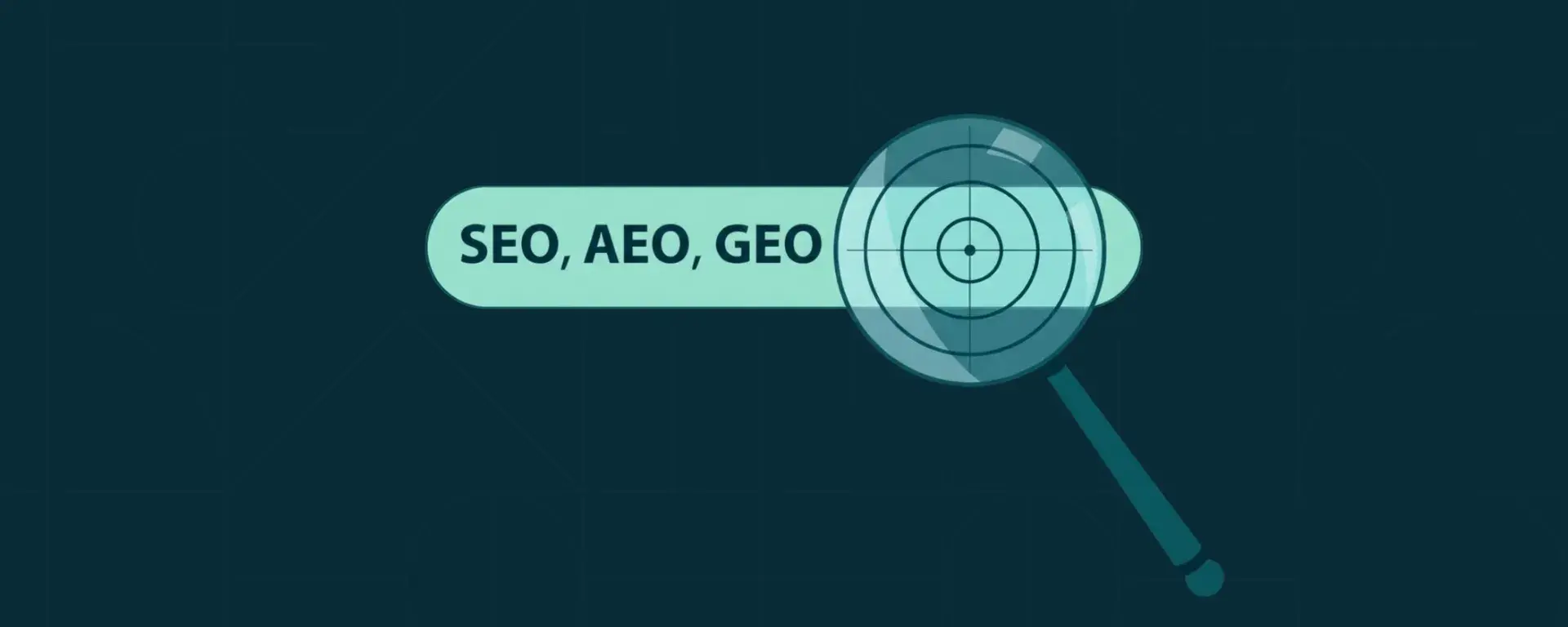
The way people search for information online is changing. For years, businesses focused on Search Engine Optimisation (SEO) to improve their Google rankings, attract organic traffic and generate leads. However, the growth of artificial intelligence is introducing new ways for customers to discover businesses, compare services and make purchasing decisions.
Today, someone looking for a digital marketing agency in Sydney might search Google, ask ChatGPT for recommendations, explore Google’s AI Overviews or use Perplexity to compare different providers.
This shift has brought two important terms into digital marketing: Answer Engine Optimisation (AEO) and Generative Engine Optimisation (GEO).
While all three approaches aim to improve online visibility, AEO and GEO are often used to describe overlapping activities focused on answer-based and AI-powered search experiences.
For Australian businesses, understanding AEO vs GEO vs SEO is becoming important when planning digital marketing investments for 2027.
But do you need all three? Should you invest in GEO instead of traditional SEO? And how can your business become more visible across Google and AI-powered platforms?
Let’s explore the differences and understand which approach makes sense for your business.
1. What Is SEO (Search Engine Optimisation)?

Search Engine Optimisation (SEO) is the process of improving a website’s visibility in organic search engine results.
When someone searches for a product, service or solution on Google or Bing, search engines display relevant websites based on various ranking systems and signals.
SEO helps businesses improve their chances of appearing for searches related to their products and services.
For example, a business offering accounting services in Brisbane might target searches such as:
- Accountant in Brisbane
- Small business accountant Brisbane
- Business tax accountant Australia
- Accounting services for small businesses
A well-planned SEO strategy helps the business reach people actively searching for these services.
What Does Traditional SEO Include?
SEO involves several activities that work together to improve website visibility.
- Keyword Research: Identifying relevant search terms based on customer needs, search intent and business objectives.
- Technical SEO: Improving website speed, crawlability, indexing, mobile usability and overall technical performance.
- On-Page SEO: Optimising page titles, headings, descriptions, content and internal links.
- Content Marketing: Publishing useful blogs, service pages, guides and resources that answer customer questions.
- Link Building: Earning relevant backlinks from credible websites to strengthen a website’s reputation and authority.
- Local SEO: Improving visibility for location-based searches through Google Business Profile, local landing pages, reviews and consistent business information.
Why SEO Still Matters in 2027
Although AI-powered search is growing, traditional SEO remains an important foundation for online visibility.
Google’s guidance confirms that its AI search experiences, including AI Overviews and AI Mode, continue to rely on established Search systems and SEO fundamentals.
For Australian businesses, this means technical optimisation, helpful and original content, clear website structure and relevance to search intent remain important.
SEO is not becoming irrelevant. The way people interact with search results is evolving.
2. What Is AEO (Answer Engine Optimisation)?

Answer Engine Optimisation (AEO) generally focuses on structuring website content so search engines and answer-based platforms can understand it and use relevant information when responding to specific questions.
Traditional search often presents users with a list of websites. Answer-focused experiences may instead provide a direct response to a question.
For example, someone might ask:
“What should a small business look for when choosing an SEO agency in Australia?”
Rather than simply displaying websites targeting that keyword, an answer engine may present a concise explanation with relevant supporting sources.
AEO aims to improve the chances of your content being selected as a useful answer.
How Does AEO Work?
AEO focuses on understanding the questions customers ask and creating content that answers them clearly. Important AEO practices include:
a. Answer Questions Directly- Provide clear explanations near the beginning of relevant sections instead of making readers search through lengthy paragraphs.
b. Use Question-Based Headings
Create headings that reflect actual customer questions, such as:
- What is SEO?
- How does Google Ads work?
- How much does SEO cost in Australia?
- Why does my website need technical SEO?
c. Structure Content Clearly
Use descriptive headings, short paragraphs, bullet points, tables and FAQs to make information easier to navigate.
d. Provide Accurate Information
Support important claims with credible references, relevant examples and current information.
e. Use Structured Data Where Appropriate
Implement relevant schema markup to help search engines understand information about your organisation, services, products and content.
Schema should accurately reflect visible website information. It can support search understanding and eligibility for certain search features, but it does not guarantee an answer placement.
Where Does AEO Matter?
AEO can support visibility across answer-focused search experiences, including:
- Google Featured Snippets
- Google’s People Also Ask results
- Voice search responses
- Google AI Overviews and AI Mode
- Conversational question-answering experiences
AEO is particularly relevant for businesses whose customers frequently research services, compare options or ask questions before making a purchase.
For example, an Australian mortgage broker could create useful content answering questions about loan eligibility, interest rates, refinancing and borrowing capacity.
This helps potential customers find relevant information while building awareness of the business.
3. What Is GEO (Generative Engine Optimisation)?
Generative Engine Optimisation (GEO) focuses on improving a brand’s visibility within AI-generated answers and recommendations.
Unlike traditional search results, generative AI platforms can combine information from multiple sources to create a conversational response.
Examples of platforms and experiences include:
- ChatGPT
- Google AI Overviews
- Google AI Mode
- Perplexity
- Gemini
Consider someone asking ChatGPT:
“Which digital marketing agencies in Sydney are suitable for small businesses looking to generate more leads?”
An AI platform may generate a response mentioning several agencies, describing their services and providing links to relevant websites.
GEO focuses on improving the quality, accessibility and credibility of a business’s online presence to support its chances of being discovered, mentioned or cited in these AI-generated responses.
How Does GEO Work?
GEO extends beyond optimising individual website pages. It considers how a business is represented across its broader online presence.
Important GEO practices include:
a. Build Strong Brand Identity
Make sure your website clearly explains your business name, services, expertise, location and target audience.
b. Develop Topical Authority
Publish useful, connected content covering important topics within your industry.
For example, an Australian financial services business could develop content around equipment finance, business loans, commercial lending, loan eligibility and financing requirements.
c. Strengthen Your Online Reputation
Build a credible online reputation through genuine customer reviews, relevant industry publications, professional organisations and trustworthy third-party references.
d. Publish Original and Informative Content
Provide expert insights, original research, practical examples, case studies and accurate information rather than simply rewriting content already available online.
e. Maintain Consistent Business Information
Ensure your business name, services, location, contact information and other important details are accurate across your website and relevant online platforms.
f. Improve Website Accessibility
Make sure important website content can be accessed by the relevant search engines and AI services. Review crawler permissions, robots.txt settings, indexing restrictions and website infrastructure.
Why GEO Matters for Australian Businesses
Customers are increasingly exploring AI-powered tools to research products, compare service providers and understand different purchasing options.
For Australian businesses, appearing in relevant AI-generated answers could create another opportunity to reach potential customers.
A company operating in Sydney, Melbourne, Brisbane or Perth should consider how its services and expertise are represented not only on its website but also across credible online sources.
However, GEO is still evolving. No business or agency can guarantee that ChatGPT, Gemini or Perplexity will recommend a particular company.
The objective should be to build a credible digital presence that supports visibility across different discovery platforms.
4. AEO vs GEO vs SEO: What Are the Key Differences?
Although SEO, AEO and GEO share many optimisation principles, they are commonly used to describe different aspects of online visibility. The distinction between AEO and GEO, however, is not universally defined.
Here is a practical comparison for businesses.
| Comparison | SEO | AEO | GEO |
| Full form | Search Engine Optimisation | Answer Engine Optimisation | Generative Engine Optimisation |
| Main objective | Improve organic search visibility | Become a useful direct answer | Improve visibility in AI-generated answers |
| Primary focus | Rankings and search traffic | Answer relevance and extraction | AI mentions and citations |
| Common platforms | Google, Bing | Featured snippets, voice search, answer experiences | ChatGPT, Gemini, Perplexity, AI search |
| Content approach | Search-intent-focused content | Clear, direct answers | Comprehensive, authoritative content |
| Important activities | Technical SEO, keywords, backlinks | Question-based content, structured answers | Topical authority, brand mentions, entity clarity |
| Measurement | Rankings, clicks, impressions and conversions | Answer visibility and featured result presence | AI citations, mentions and referral traffic |
The important thing to understand: These are not completely separate marketing disciplines. Strong SEO supports AEO and GEO, while answer-focused content and broader brand authority can strengthen the overall search strategy.
Google describes AEO and GEO as terms used for work focused on improving visibility in AI search experiences. However, from Google’s perspective, optimising for its generative AI search features is still part of SEO.
5. Do You Need SEO, AEO and GEO Separately in 2027?
This is one of the most important questions for businesses planning their digital marketing budgets.
The short answer is that most businesses should build one integrated search strategy rather than investing in three completely separate optimisation programmes.
The right balance depends on your industry, competition, website performance, customer behaviour and business objectives.
When Should You Prioritise SEO?
SEO should be a priority if:
- Your website receives very little organic traffic.
- Your important service pages are not ranking.
- Your website has technical SEO problems.
- Your business depends on Google search enquiries.
- Your competitors have stronger organic visibility.
- You need to build sustainable organic traffic.
For example, a new plumbing business in Sydney should first establish its website, service pages, location targeting, technical SEO and local search presence.
Without these foundations, focusing exclusively on AI visibility may not address its biggest marketing challenges.
When Should You Prioritise AEO?
AEO deserves greater attention if:
- Your customers frequently ask questions before purchasing.
- Your industry involves complex products or services.
- Your website publishes educational resources.
- You want to improve visibility for question-based searches.
- Your content is useful but difficult to navigate or extract answers from.
For example, a healthcare clinic could create clear educational resources answering common questions about treatments, appointments and available services.
This makes the information more useful for patients and easier to understand across different search experiences.
When Should You Prioritise GEO?
GEO may deserve greater attention if:
- Customers use AI platforms to compare businesses.
- Your industry has strong competition for brand recommendations.
- Your business wants to improve its presence in AI-generated answers.
- Your website already has reasonable SEO foundations.
- Your brand has limited recognition across credible third-party sources.
- You want to monitor how AI platforms describe your business.
For example, a Sydney-based digital marketing agency could strengthen its website content, publish original industry insights, earn credible business mentions and monitor whether AI platforms accurately identify its services.
This can help build a stronger digital footprint beyond traditional keyword rankings.
6. How Australian Businesses Can Combine SEO, AEO and GEO
Rather than treating these approaches as separate projects, businesses should build a connected strategy.
Consider an Australian business offering commercial finance services.
Its integrated search strategy could look like this:
Step 1: Build the SEO Foundation
Develop dedicated pages for equipment finance, commercial vehicle finance, business loans and other relevant services.
Improve technical SEO, conduct keyword research and build relevant internal links.
Step 2: Introduce AEO-Focused Content
Create helpful resources answering questions such as:
- What is equipment finance?
- What documents are required for an equipment loan?
- How does commercial vehicle finance work?
- What should businesses consider before applying for finance?
Provide direct answers supported by useful explanations.
Step 3: Strengthen GEO Visibility
Publish expert insights, demonstrate industry experience, earn credible industry mentions and maintain accurate business information across relevant online platforms.
Develop content that explains the business’s services and expertise clearly.
Step 4: Measure All Three Approaches
Review traditional search performance, answer-based visibility and brand mentions or citations across relevant AI platforms.
Most importantly, connect these activities to qualified enquiries, appointments and completed sales.
This creates a more complete understanding of how customers discover the business.
7. How to Measure SEO, AEO and GEO Performance in 2027
One of the biggest challenges with AI search optimisation is measurement.
Traditional SEO has established reporting tools and metrics. By comparison, AEO and GEO measurement is less standardised, with limited direct reporting available across different AI platforms.
Businesses should consider the following indicators.
SEO Performance Metrics
- Keyword rankings.
- Organic clicks and impressions.
- Organic website traffic.
- Search visibility.
- Indexed pages.
- Organic conversion rates.
- Qualified enquiries.
- Revenue from organic search.
Useful tools include Google Search Console, Google Analytics 4 and professional SEO platforms.
AEO Performance Metrics
- Featured snippet appearances.
- Visibility for question-based searches.
- Presence in relevant answer experiences.
- Brand mentions in direct answers.
- Referral traffic from answer-focused platforms, where identifiable.
GEO Performance Metrics
- Brand mentions across AI platforms.
- AI-generated citations and source links.
- Share of relevant AI responses mentioning your business.
- Accuracy of business descriptions.
- AI referral traffic.
- Leads and conversions influenced by AI discovery.
For example, a business could regularly test 20 relevant customer questions across ChatGPT, Gemini and Perplexity to understand whether its brand is mentioned and which sources are referenced.
These checks should be repeated using consistent questions and recorded over time because AI responses can vary.
Google’s Search Central guidance also recommends using Search Console to monitor performance associated with its generative search experiences, where reporting is available.
The goal is to move beyond simply measuring visibility and understand whether that visibility contributes to business growth.
8. Common Mistakes Businesses Should Avoid

As AEO and GEO become more popular, businesses may encounter misleading claims and unnecessary optimisation activities.
Here are some mistakes to avoid.
Treating GEO as a Replacement for SEO
Traditional SEO remains important for search visibility and provides a foundation for AI search discovery. Do not abandon technical SEO, keyword research or useful website content.
Assuming Schema Guarantees AI Citations
Structured data helps search engines understand website information, but there is no special schema that guarantees inclusion in AI-generated answers.
Use schema appropriately as part of your wider SEO strategy.
Publishing Large Volumes of Generic AI Content
Publishing more articles does not automatically improve visibility. Focus on accuracy, original insights, customer relevance and genuine expertise.
Ignoring Third-Party Brand Presence
Your website is not the only source of information about your business. Relevant reviews, industry publications, partnerships and genuine brand mentions can contribute to your broader digital reputation.
Expecting Guaranteed AI Recommendations
No agency can guarantee that ChatGPT, Gemini or another AI platform will recommend your business for a particular question.
Be cautious of providers promising guaranteed AI rankings or citations without explaining the actual work involved.
9. A Practical Search Optimisation Roadmap for Australian Businesses in 2027
If your business wants to prepare for changing search behaviour, consider following this practical roadmap.
| Priority | Recommended activity | Business objective |
| First | Technical SEO and website improvements | Establish a strong search foundation |
| Second | Keyword research and service page optimisation | Attract relevant organic traffic |
| Third | Question-based content and FAQs | Improve answer-focused visibility |
| Fourth | Build topical authority and original resources | Demonstrate expertise |
| Fifth | Strengthen brand mentions and online reputation | Improve broader digital credibility |
| Sixth | Monitor AI visibility and citations | Understand generative search presence |
| Seventh | Track qualified leads and revenue | Measure commercial performance |
The timing and effort required will vary depending on your website’s existing condition, competition and available resources.
For smaller Australian businesses, starting with technical SEO, local search and important service pages may provide a more practical foundation before expanding into more specialised AEO and GEO activities.
Conclusion: The Future of Search Is About Being Found, Answered and Recommended
SEO, AEO and GEO describe different but closely connected approaches to improving online visibility.
SEO helps businesses improve their presence in traditional search results. AEO focuses on making useful information available as direct answers. GEO aims to improve a brand’s visibility within generative AI responses.
For Australian businesses preparing for 2027, the opportunity is not to choose one and abandon the others. It is to understand how customers discover information and develop a connected strategy that supports visibility across these experiences.
A strong technical foundation, useful content, clear answers, genuine expertise and a credible online reputation remain important across all three approaches.
At netStripes, we help Australian businesses combine traditional SEO with emerging AI search optimisation strategies to build stronger online visibility and generate measurable business outcomes.
Whether your business needs to improve Google rankings, strengthen its presence in AI-generated answers or build a more comprehensive search strategy, the right approach starts with understanding your current digital performance.
Explore our SEO Agency Services in Australia and discover how a connected search strategy can help your business grow in 2027.
Don’t just aim to rank on Google. Build a digital presence that helps your business get found, understood and considered wherever your customers search.
Get a Free Strategy Call
45 minutes with Tony. No pitch. A direct assessment of your situation. No charge.
Response within 4 business hours · Australian team · No pitch · No lock-in
Recent Posts
- 01 The Future of Content Marketing: How AI Watermarking Changes the Game for Australian Businesses November 19, 2026
- 02 How to Win Across AI, Search, Social & YouTube: A Digital Growth Strategy for Australian Businesses November 17, 2026
- 03 Google Ads in the Age of Automation: What Still Works & Matters for Australian Businesses November 17, 2026
- 04 Healthcare SEO in Australia: A Guide to SEO for the Healthcare Industry October 23, 2026
- 05 SEO for Attorneys: A Guide to Search Engine Optimisation for Law Firms & Lawyers in Australia October 19, 2026
1-on-1 Digital Strategy Advisory
Government-recognised advisory for small business. Get a clear, prioritised growth plan built around your numbers — not a sales pitch.