

The way customers discover and choose businesses is changing. People no longer rely on Google alone to find products, services, or recommendations. They might ask ChatGPT for suggestions, compare businesses on Google Search, discover brands on Instagram or Facebook, and watch YouTube videos before deciding to buy.
For Australian businesses, this creates both an opportunity and a challenge. Being visible on just one platform may no longer be enough to reach customers throughout their buying journey.
The opportunity is to build a connected digital marketing strategy that combines AI visibility, search engine optimisation (SEO), social media marketing and YouTube.
Whether you run a small business in Sydney, an established company in Melbourne or a growing brand serving customers across Australia, your marketing channels should work together to attract, engage and convert potential customers.
Here is how businesses can strengthen their presence across these four important digital channels.
1. AI Search: Make Your Business Visible in AI-Generated Answers

AI-powered platforms are changing how people research businesses and make decisions. Tools such as ChatGPT, Google AI Overviews, Gemini and Perplexity can help users to ask detailed questions and receive summarised answers, recommendations and supporting sources.
For example, someone looking for a digital marketing agency in Australia might ask an AI assistant:
“Which digital marketing agencies in Sydney help small businesses generate more leads?”
Instead of browsing multiple websites individually, the user may receive suggestions for relevant businesses and sources to explore further.
This means companies need to think beyond traditional Google rankings and consider how their brands are represented in AI-generated answers.
How Australian businesses can improve AI visibility:
- Publish informative content that directly answers customer questions.
- Clearly explain your products, services, expertise and service locations.
- Maintain consistent business information across your website and online directories.
- Implement relevant structured data and schema markup.
- Build genuine reviews, industry mentions and authoritative backlinks.
- Create detailed service pages supported by useful educational content.
- Ensure search and AI crawlers can access important website content.
For example, an accounting firm in Brisbane should publish useful information about business tax, accounting services and financial reporting rather than relying exclusively on a homepage describing its services.
The goal is to make your business easier for AI systems and potential customers to understand, verify and trust.
2. Google Search: Build Strong Organic and Paid Visibility
Google Search remains an important channel for customers who are actively looking for products and services.
When someone searches for “commercial painters in Sydney” or “equipment finance broker in Brisbane”, they are often looking for a specific service. Appearing in relevant results can help businesses attract enquiries from potential customers with clear intent.
A successful search strategy combines organic SEO with paid advertising.
Search Engine Optimisation (SEO)
SEO helps your website appear in relevant organic search results without paying for every click.
Businesses should focus on:
- Keyword research based on customer search intent.
- Technical SEO, including website speed, indexing and mobile usability.
- High-quality service pages and informative blog content.
- Internal linking between relevant website pages.
- Local SEO and Google Business Profile optimisation.
- Building topical authority and credible backlinks.
For Australian businesses serving specific areas, local relevance is particularly important. A Sydney-based business should create useful location pages and content that reflects the needs of customers in the areas it serves.
Google Ads
SEO takes time to build organic visibility, whereas Google Ads can help businesses reach potential customers through paid placements.
Effective Google Ads campaigns should include:
- Relevant keyword and search intent targeting.
- Compelling ad copy.
- Accurate conversion tracking.
- Location and audience targeting.
- Negative keyword management.
- Well-optimised landing pages.
- Regular performance and lead quality reviews.
Businesses should measure the commercial outcomes of their search campaigns, including qualified enquiries and conversions, rather than focusing only on impressions and clicks.
Combining SEO and Google Ads helps businesses reach customers through both organic and paid search opportunities.
3. Social Media: Turn Attention into Trust and Engagement
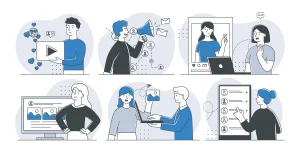
Social media is no longer just a platform for sharing company updates. It plays an important role in brand discovery, customer engagement, reputation building and lead generation.
Platforms such as Facebook, Instagram and LinkedIn give Australian businesses opportunities to connect with different audiences.
However, simply posting regularly does not guarantee results. Businesses need to create content that is relevant to their audience and aligned with their marketing objectives.
Choose Platforms Based on Your Audience
Different platforms serve different business purposes.
- Facebook: Useful for local business communities, customer engagement, promotions and targeted advertising.
- Instagram: Suitable for visual storytelling, product demonstrations, behind-the-scenes content and brand awareness.
- LinkedIn: Valuable for B2B businesses, professional services, industry insights and building business relationships.
Rather than trying to maintain an active presence everywhere, businesses should prioritise platforms where their potential customers spend time.
Create Content That Provides Value
A balanced social media strategy should include:
- Educational posts answering common customer questions.
- Customer testimonials and genuine success stories.
- Product and service demonstrations.
- Behind-the-scenes content.
- Industry updates and practical advice.
- Short-form videos and reels.
- Promotional campaigns with clear calls to action.
For example, an Australian home renovation company could share before-and-after project images, renovation tips, customer feedback and short videos explaining its services.
This helps potential customers understand the business before contacting it.
Use Paid Social Advertising Strategically
Organic social media builds familiarity over time, while paid advertising can extend reach and target specific audiences.
Meta Ads, covering Facebook and Instagram, can help businesses promote services, generate enquiries, retarget website visitors and test different creative messages.
The strongest results often come from combining useful organic content with carefully managed paid campaigns.
4. YouTube: Build Visibility Through Video and Educational Content

Video has become an important part of how customers research products, compare services and learn about businesses.
YouTube provides businesses with an opportunity to demonstrate expertise, explain complex services and build trust through useful visual content.
Unlike many social media posts that may have a short visibility window, well-optimised YouTube videos can continue attracting viewers through search and recommendations over time.
Create Videos Around Customer Questions
Businesses should start by identifying the questions their customers regularly ask.
For example:
- A financial services company could explain different business finance options.
- A construction company could demonstrate its building process.
- A healthcare provider could create educational videos about its services.
- An eCommerce business could publish product demonstrations and comparison videos.
These videos help customers understand what a business offers before making a decision.
Optimise Videos for YouTube Search
Publishing a video is only one part of the process. Businesses also need to make their content discoverable.
Important YouTube optimisation practices include:
- Use relevant keywords in video titles.
- Write informative video descriptions.
- Create engaging and relevant thumbnails.
- Add captions and accurate subtitles.
- Organise related videos into playlists.
- Include clear calls to action.
- Embed relevant videos on supporting website pages.
For example, a Sydney-based home renovation business publishing a video about kitchen renovations should use a descriptive title and explain the project, process and services in its description.
YouTube should also support the wider marketing strategy. A useful video can be embedded into a service page, shared across social media and referenced in relevant blog content.
This allows one piece of content to contribute to visibility across multiple channels.
5. Connect All Four Channels Instead of Marketing in Silos
One common mistake is managing AI search, SEO, Google Ads, social media and YouTube as completely separate activities.
A connected approach allows each channel to support the others.
Consider an Australian business offering commercial cleaning services.
Its digital marketing journey could look like this:
Step 1 – AI Discovery: A business owner asks an AI assistant for advice on choosing a commercial cleaning provider.
Step 2 – Google Search: They search for commercial cleaning services in their city and discover the company’s website.
Step 3 – Social Media: They visit the company’s LinkedIn or Facebook page to review its projects, customer feedback and business updates.
Step 4 – YouTube: They watch a video explaining the company’s cleaning process and service standards.
Step 5 – Conversion: They return to the website, review the service information and submit an enquiry.
The customer may not follow this exact journey every time. They might discover the company through YouTube first or see a Google advertisement before searching for reviews.
The important point is that each channel should provide a consistent brand experience and make the next step easier.
6. Repurpose Content to Increase Marketing Efficiency
Creating fresh content for every platform can become expensive and time-consuming, particularly for small and medium-sized Australian businesses.
Content repurposing allows businesses to turn one valuable idea into multiple marketing assets.
For example, a business publishing a blog about choosing the right business finance solution could transform it into:
- A YouTube video explaining the key considerations.
- Short Instagram and Facebook videos highlighting important points.
- A LinkedIn post discussing industry insights.
- An email newsletter sharing the article.
- An FAQ section answering related customer questions.
- Supporting content for relevant AI and organic search queries.
This approach helps businesses maintain consistent communication without having to start from scratch for every platform.
AI tools can assist with research, content outlines, transcription and adapting content into different formats. However, human expertise should guide the final messaging to ensure accuracy, originality and relevance.
7. Measure What Matters Across Every Channel
Having a presence across multiple platforms is not enough. Businesses need to understand which activities are contributing to enquiries, sales and revenue.
Each marketing channel should have relevant performance indicators.
| Channel | Important performance indicators |
| AI Search | Brand mentions, citations, referral traffic and resulting enquiries |
| Google SEO | Organic clicks, rankings, impressions and conversions |
| Google Ads | Cost per conversion, qualified leads and return on ad spend |
| Social Media | Engagement, reach, referral traffic and leads |
| YouTube | Watch time, audience retention, engagement and website conversions |
Businesses should also use tools such as Google Analytics 4, Google Search Console, Google Ads conversion tracking and CRM reporting to understand their overall marketing performance.
For example, a campaign might generate significant social media engagement but very few qualified enquiries. Meanwhile, a smaller SEO campaign could attract fewer visitors but generate more paying customers.
Understanding these differences helps businesses allocate their marketing budgets more effectively.
8. Building an Integrated Digital Marketing Strategy for 2027

As digital platforms continue to evolve, Australian businesses should focus on building a marketing system that can adapt to changing customer behaviour.
Here are five practical priorities for the year ahead:
1. Strengthen your website foundations
Ensure your website is technically sound, mobile-friendly, easy to navigate and structured around your products and services.
2. Improve search and AI visibility
Invest in SEO, useful content, local search optimisation and a consistent online brand presence.
3. Build a consistent social media presence
Develop a content calendar that reflects customer interests, business goals and the platforms most relevant to your audience.
4. Invest in useful video content
Create educational videos, product demonstrations, customer stories and service explanations that help potential customers make informed decisions.
5. Connect marketing performance with revenue
Track the complete customer journey, from initial discovery to qualified enquiry and completed sale. Use these insights to improve your marketing decisions.
Bringing these activities together gives businesses a more consistent and measurable approach to digital growth.
Conclusion: Winning Online Requires More Than One Marketing Channel
The digital landscape is becoming increasingly connected. Customers move between AI assistants, Google Search, social media and YouTube as they research, compare and choose businesses.
For Australian businesses, success requires more than ranking on Google or maintaining a social media account. It means building a consistent presence across the platforms customers use throughout their buying journey.
AI search helps businesses become discoverable in new ways. SEO and Google Ads capture search demand. Social media builds relationships and brand trust. YouTube demonstrates expertise through video content.
When these channels work together, businesses can create more opportunities to attract the right audience, generate qualified enquiries and grow revenue.
At netStripes, we help Australian businesses bring SEO, Google Ads, Meta Ads, social media marketing, content and digital strategy together into a connected growth system.
If your business wants to improve its online visibility and build a stronger digital marketing strategy, explore our Digital Marketing Services in Australia and discover how an integrated approach can support your business growth.
Don’t rely on just one channel to grow your business. Build a digital presence that works wherever your customers search, discover and engage.
Get a Free Strategy Call
45 minutes with Tony. No pitch. A direct assessment of your situation. No charge.
Response within 4 business hours · Australian team · No pitch · No lock-in
Recent Posts
- 01 Google Ads in the Age of Automation: What Still Works & Matters for Australian Businesses November 17, 2026
- 02 Healthcare SEO in Australia: A Guide to SEO for the Healthcare Industry October 23, 2026
- 03 SEO for Attorneys: A Guide to Search Engine Optimisation for Law Firms & Lawyers in Australia October 19, 2026
- 04 Generative Engine Optimisation: A Guide to GEO for Australian Businesses August 24, 2026
- 05 Artificial Intelligence SEO: A Guide to AI for SEO in Australia August 24, 2026
1-on-1 Digital Strategy Advisory
Government-recognised advisory for small business. Get a clear, prioritised growth plan built around your numbers — not a sales pitch.